Leonid meteor shower 2026: when and how to watch the November 18 peak
The Leonid meteor shower peaks overnight on November 17-18 with up to 15 meteors an hour. When to watch in Europe, where to look and how to shoot it.
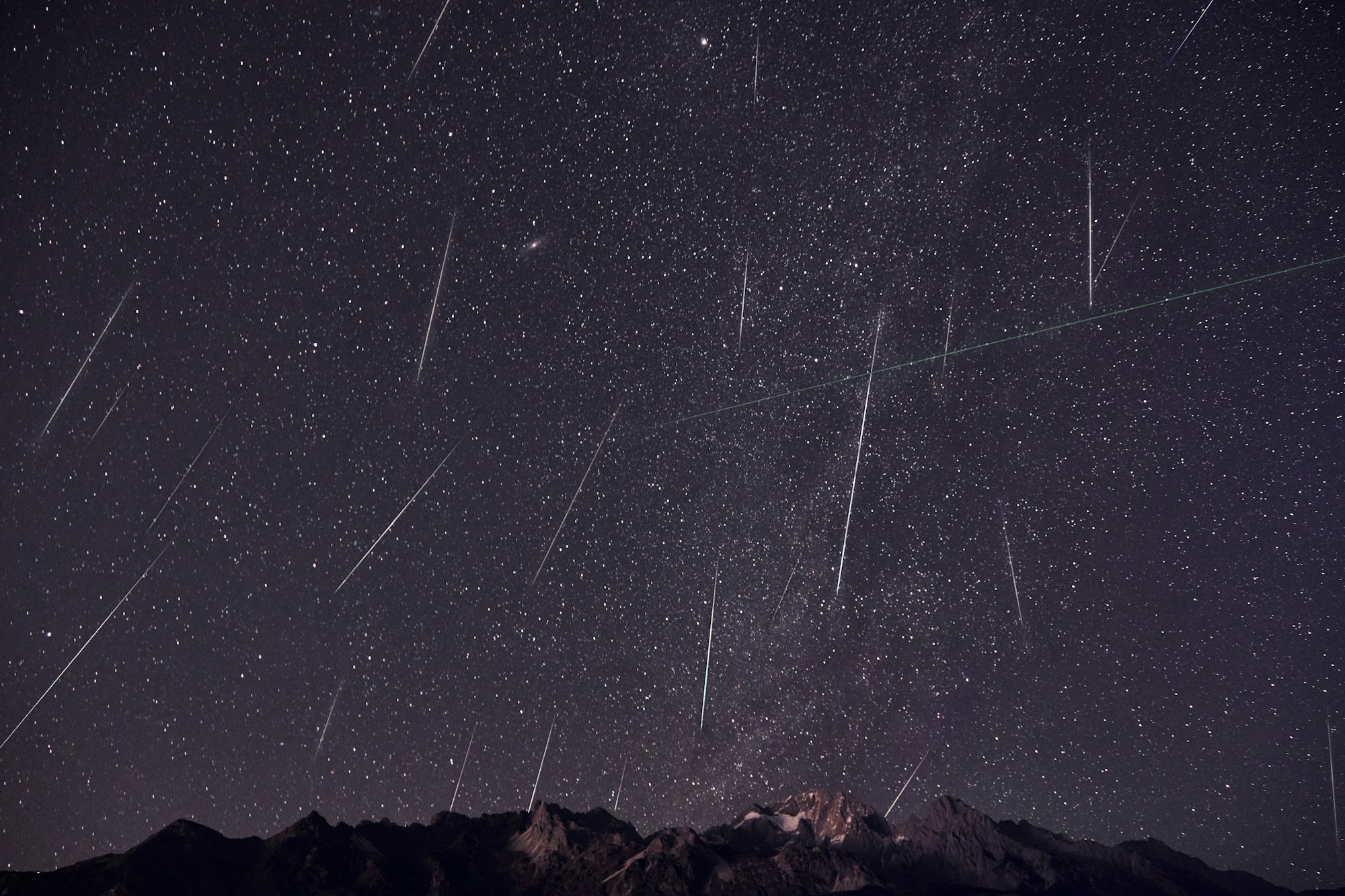
In short: The International Meteor Organization (IMO) predicts the Leonid meteor shower will peak on November 17 at 23:45 UTC, which is 00:45 on November 18 in Central Europe and 01:45 in Kyiv. Expect up to 15 meteors an hour under ideal skies, with the best viewing from about 2am until dawn, after the Moon has set.
No storm is expected this year, but the Leonids are the fastest meteors of any annual shower, hitting the atmosphere at around 71 km/s and often leaving bright, glowing trails. The shower is active from November 6 to 30, and you won't need a telescope.
When is the best time to see the Leonids in Europe and Ukraine?
The key night in Europe is November 17 to 18. The predicted maximum falls at 00:45 CET (Berlin, Warsaw, Vienna, Paris) and 01:45 Kyiv time. An alternative model by Maslov, cited by the IMO, puts the peak earlier, around 16:00 UTC on November 17, so start watching in the evening.
The radiant, the point the meteors appear to fly out of, rises around 22:20 local time in Kyiv and Berlin. At the peak it is only about 30 degrees up, but by 6am it reaches roughly 60 degrees. The higher the radiant, the more meteors you see, so the best hours run from 2am until the sky brightens (around 05:20 in Kyiv).
Will the Moon or clouds spoil the show?
First quarter Moon arrives on November 17 at 11:48 UTC. The half-lit Moon sets around midnight: at about 23:20 in Kyiv, around 23:30 in Berlin and Vienna, and shortly after 00:20 in Paris. After that the sky is dark, and the IMO says moonlight will not affect observations near the maximum.
Weather is the bigger worry in Ukraine: the Ukrainian Hydrometeorological Center forecasts cloud and rain at times in Kyiv on the night of November 18, and across much of the country. Wherever you are, check a cloud-cover map before heading out. If the peak night is a washout, the following nights still offer a chance, with fewer meteors.
How many meteors will I actually see?
A ZHR of 15 assumes a perfect sky with the radiant directly overhead. Space.com warns that real-world counts will be noticeably lower. Astronomy site Astrotools estimates 8 to 12 meteors an hour under a dark rural sky before dawn, and just 2 to 4 from the suburbs.
The IMO isn't predicting an outburst. Models by Jérémie Vaubaillon and Mikiya Sato show Earth meeting several thin dust trails from the parent comet. Vaubaillon expects no significant outburst from the 1800 trail, while Sato allows for a modest rise in rates.
Where do the Leonids come from, and why is 1966 so famous?
The shower comes from comet 55P/Tempel-Tuttle, which orbits the Sun about every 33 years and is due back in 2031. Each November, Earth crosses its dust.
Every few decades the Leonids turn into a genuine meteor storm. In 1833 more than 100,000 meteors an hour lit up the skies over North America. In 1966, exactly 60 years ago, observers in the Americas counted over 40 meteors per second, roughly 144,000 an hour. The 2001 storm delivered up to 3,000 an hour. Astronomers expect the next storms in the early 2030s, after the comet returns.
Where should I look, and how do I photograph meteors with a phone?
Get as far from city lights as you can. Give your eyes 30 minutes to adapt, stay off your phone screen and use a red torch if you need light. The radiant sits in the Sickle of Leo, a pattern shaped like a backward question mark. This year it's easy to find, because Jupiter and Mars are shining brightly right next to it in Leo. You don't have to stare at the radiant, though. Meteors can appear anywhere in the sky.
- Mount your phone on a tripod or rest it on something solid.
- Use night mode, or manual mode with a 10 to 30 second exposure.
- Switch to the wide-angle lens and set focus to infinity.
- Shoot continuously or in time-lapse mode. More frames mean a better chance of catching a meteor.
Dress warmly and bring a reclining chair and a hot drink.
FAQ
Do I need a telescope to see the Leonids?
No. Meteors are best seen with the naked eye because they can appear anywhere in the sky, and a telescope or binoculars only narrow your view.
Can I still see the Leonids after November 18?
Yes. The shower stays active until November 30, although rates drop off gradually after the peak.
Will there be a Leonid meteor storm in 2026?
No. The IMO isn't forecasting an outburst. The next bursts of activity are linked to comet 55P/Tempel-Tuttle's return in 2031.
Share
Read next
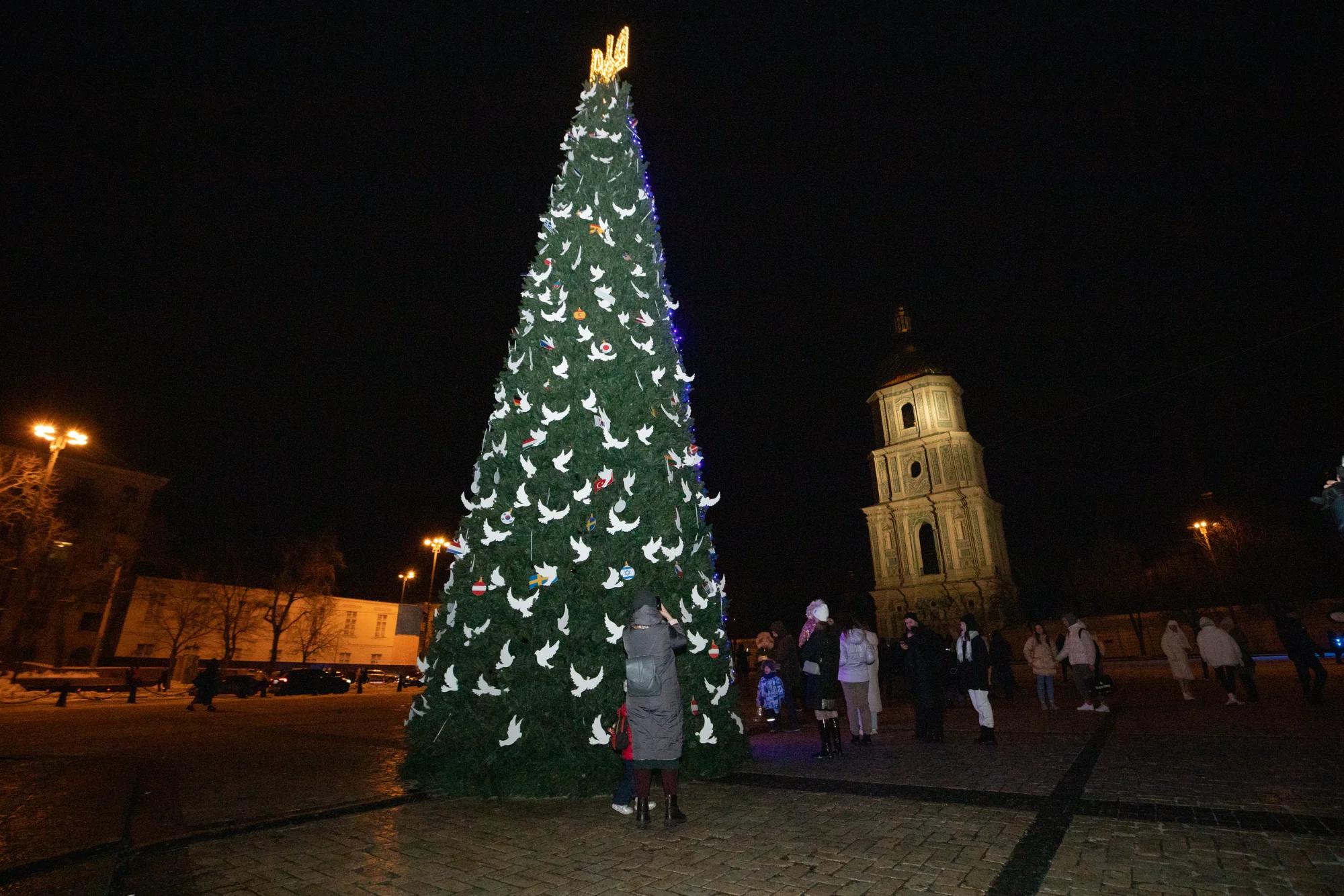
Ukraine's main Christmas tree 2026: 18 metres, lit on 6 December
Ukraine's main Christmas tree 2026 on Sofiiska Square will be 18 metres tall, built from 3,000 branches and lit on 6 December, funded by patrons.
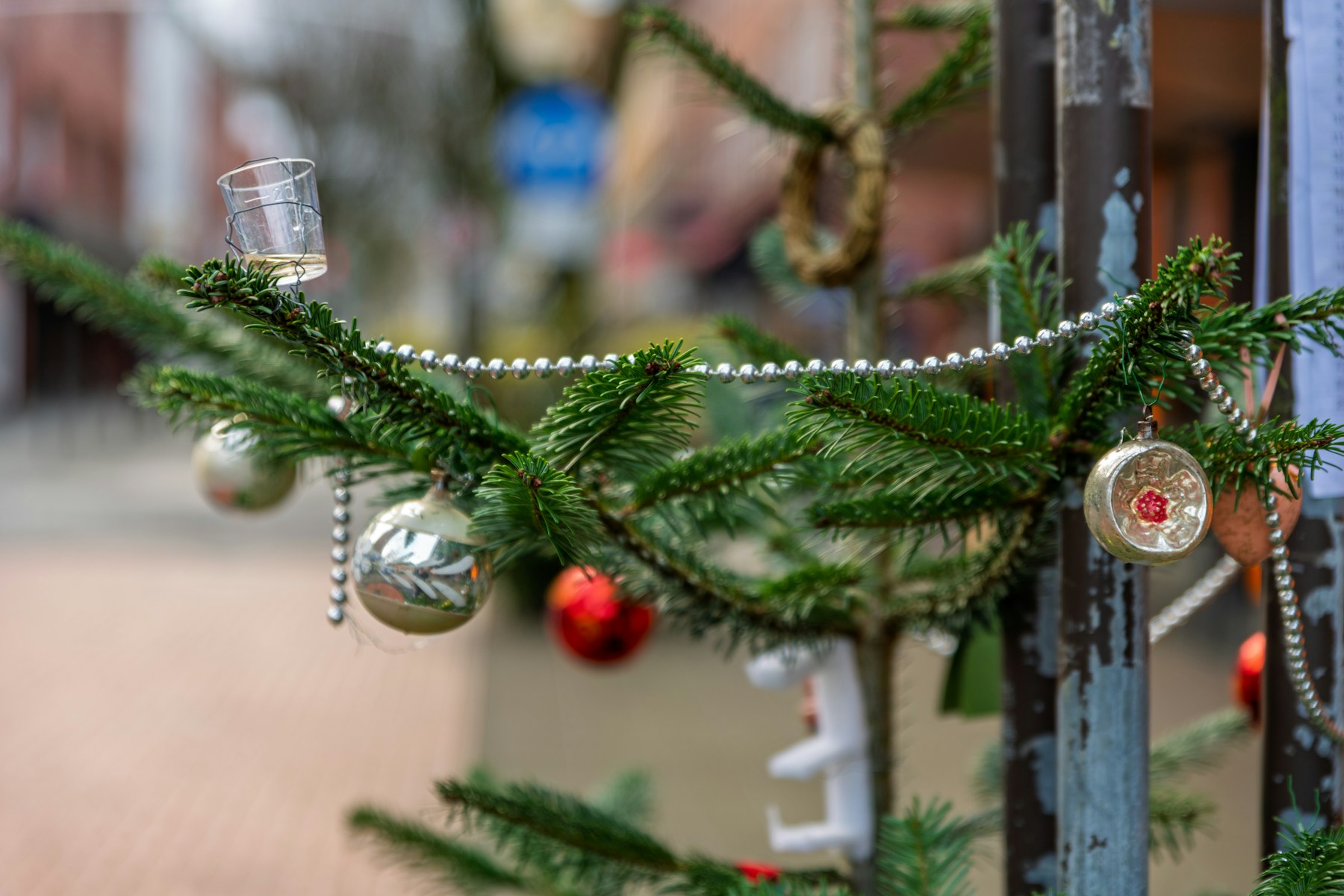
Beaded tinsel: the vintage Christmas tree trend you can make in an evening
Beaded tinsel is the vintage Christmas tree trend taking over Instagram and TikTok. Where it came from, what it costs and how to make your own in an evening.

64% of Ukrainians Don't Trust Black Friday Discounts: Viber Poll
Black Friday 2026: 64% of Ukrainians don't trust the discounts, a Viber poll shows. What shoppers will buy on November 27 and how to spot a fake deal.
Comments 0
No comments yet. Be the first!