OpenAI Disbands Robotics Team as GPT-6 Astra Starts Running Robots
OpenAI disbands its robotics team, moving staff under Mark Chen and Greg Brockman and betting GPT-6 Astra can run robots. Here's what Nvidia's test found.
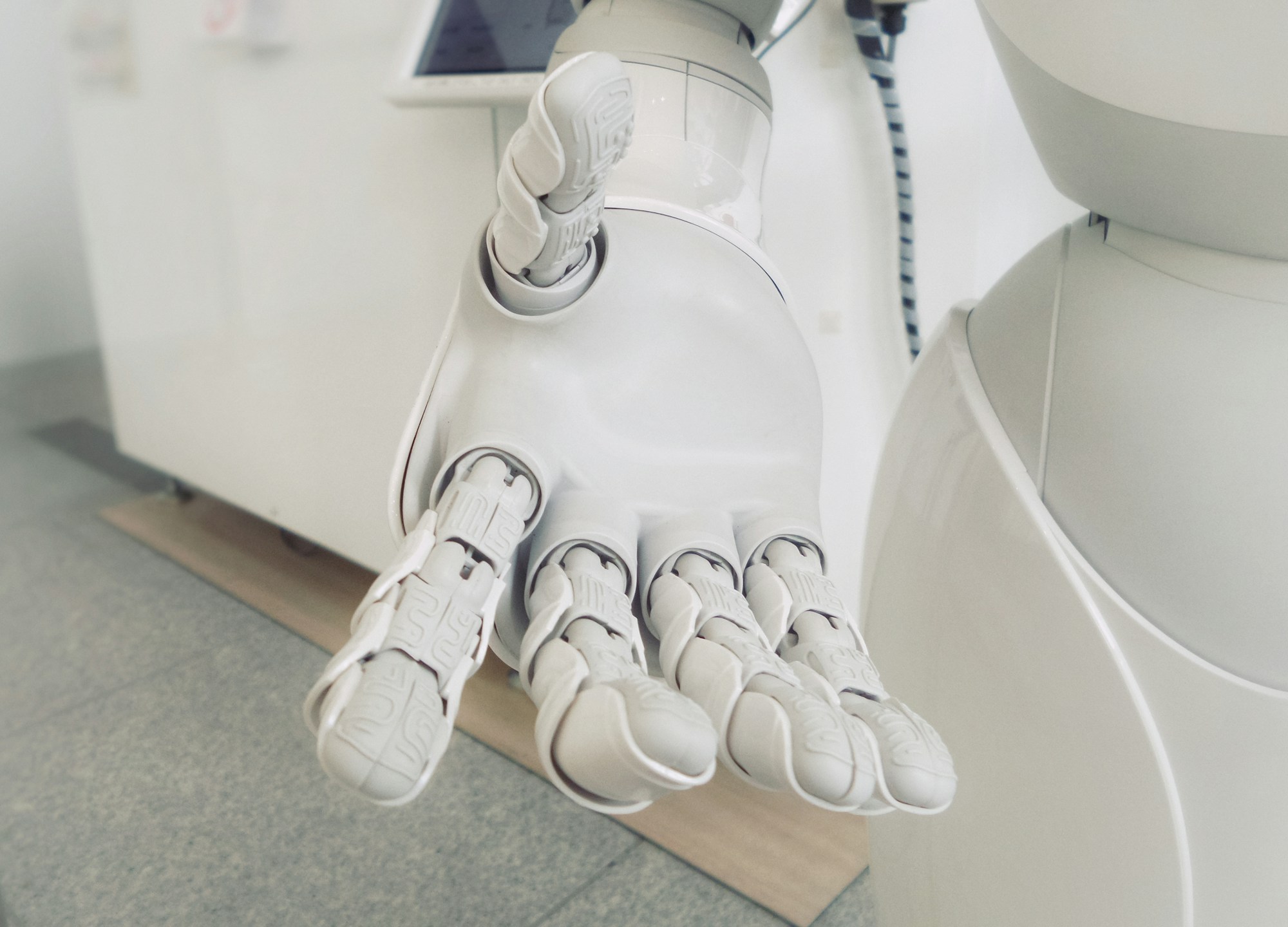
In short: OpenAI has broken up its stand-alone robotics team. Researchers now sit in Mark Chen's core research group, while the applied robotics and hardware engineers have moved into Greg Brockman's Applied organization. The bet is that general-purpose models like GPT-6 Astra can run robots directly, without a separate robotics model.
Fortune broke the news on November 13, and OpenAI confirmed the reorganization. The company later told The Decoder that the team had been restructured to work more closely with research and product, not shut down, and that its robotics work continues.
What exactly changed at OpenAI?
There is no longer a dedicated robotics unit. Robotics researchers report to Chief Research Officer Mark Chen, and the applied robotics and hardware teams are now part of Applied, the organization led by OpenAI President Greg Brockman.
The move appears to have come at short notice. According to Fortune, OpenAI had booked a booth at CoRL, one of the top academic robot learning conferences, held in Austin on November 9-12. When a Fortune reporter visited booth 208, it was empty, with no logo and no demo.
This is OpenAI's second exit from a dedicated robotics effort. Its first team, known for a robotic hand that solved a Rubik's Cube, was wound down in 2020, with cofounder Wojciech Zaremba citing a shortage of robot training data. The company rebuilt the group in 2024 and partnered with humanoid maker Figure, but Figure walked away in February 2025 to build its own AI.
Why does OpenAI think it no longer needs a robotics team?
The strongest argument came from Nvidia. In October, Nvidia's Seattle Robotics Lab published "Astranomy," a study that tested GPT-6 Astra as a native robot policy. The model received camera images, robot state data and a control interface, with no extra fine-tuning on robot data.
- On RoboLab-120, a benchmark of 120 simulated manipulation tasks run five times each, an agent built on Astra succeeded 74.8% of the time.
- The best specialized entry on the leaderboard, a model called Lakeside, had reached 51.0%.
- The widely used VLA model π0.5 scored 28%, and Nvidia's own Cosmos3-Nano-Policy scored 36.8%.
Guanya Shi, a professor at Carnegie Mellon's Robotics Institute, told Fortune the move suggests OpenAI sees robotics as "no longer a special problem," but rather as a downstream application of general intelligence.
Does this mean GPT-6 Astra can already control real robots?
Not yet. The Nvidia authors themselves point to a large gap between the model's capability and real-time control. Astra's agentic setup took 13.37 seconds per decision on average, while π0.5 responds in roughly 47 milliseconds. A single agentic episode cost about $36.40. The simulator was paused while the model was thinking, and contact-rich, long-horizon and dynamic tasks were not tested.
An independent evaluation on the RoboDojo benchmark, posted in September by researchers from HKU, Tsinghua, UC Berkeley and other universities, put Astra at just 22.48% success across 42 tasks. That still beat the best public policy at 19.34%. A real-hardware trial was halted after the model repeatedly issued unsafe commands and damaged equipment, though nobody was hurt.
Industry voices are cautious too. MIT professor Russ Tedrake, cofounder of Walden Robotics, told Fortune that robotics companies keep an edge through real-world deployment data from places like factory floors. Shi still expects robots to need smaller models that run onboard without a constant connection.
When will OpenAI show its humanoid robot?
According to Fortune, OpenAI is developing its own humanoid, and CEO Sam Altman is aiming for a first public demonstration in 2027. The company says general-purpose robots remain part of its long-term plans.
The reshuffle also fits a broader push to cut costs. Fortune reports that OpenAI posted $10.9 billion in operating losses in its most recent quarter, is raising a new funding round and could go public in early 2027. Altman has told staff to drop "side quests," and the company has already shelved projects such as Sora to free up compute.
FAQ
Has OpenAI abandoned robotics?
No. The dedicated team is gone, but its researchers and engineers have been spread across Mark Chen's and Greg Brockman's organizations, and OpenAI says robotics work continues.
What is GPT-6 Astra?
It is OpenAI's flagship multimodal model, launched on September 3, 2026. It handles text, images and 3D scenes, and Nvidia's tests show it can control a robot arm without dedicated robot training.
How reliable is the 74.8% figure?
It comes from 600 simulated episodes with no real-time speed requirement. On physical robots and on other benchmarks, Astra's results so far are much more modest.
Share
Read next
Switzerland confirms first AI agent cyberattacks, two on critical infrastructure
Switzerland confirms its first AI agent cyberattacks: five cases, four breaches, two at critical infrastructure operators. Here is what BACS recommends.
ChatGPT merges Chat and Work under one usage limit: what changes in December
ChatGPT's Chat, Work and Codex will share one usage limit from December on Plus, Pro and Business. Instant is exempt. Who is affected and what to do.
Google AI Mode Can Now Tap Into Your Wallet, Drive and Gemini
Google AI Mode now connects to Wallet, with Drive and the Gemini app next. Here is how it works, how to turn it on or off, and what it means for privacy.
Comments 0
No comments yet. Be the first!